Light Tackle Walleye Fishing
by Dave Reed
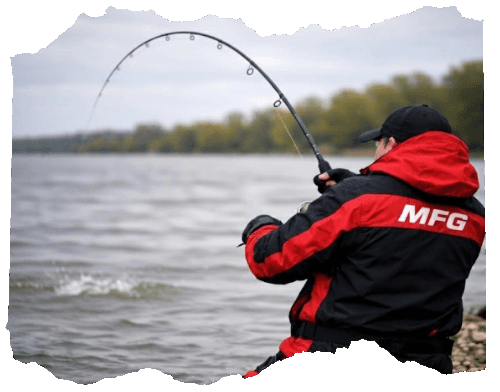
I believe my 70 years of walleye fishing makes me an old-timer with a rediculous overload of personal how-to opinions. I’ve learned from anglers like Al Lindner, Spence Petros, Homer Circle, Babe Winkleman, Bill Dance and from publications like Fishing Facts and In-Fisherman. The single most important thing I myself learned in all these years is that fishing is best enjoyed when I am not only catching fish but especially when I am doing it "my way". I seem to always catch more walleye when I'm using my lightest fishing gear. However, more importantly, I'm having one heck of a lot more fun catching fish on my light tackle combinations.
If you want to enjoy light tackle fishing, it is important to carefully and thoughtfully set yourself up with an integrated system capable of catching the largest walleye you might encounter. It all starts by building a rod-reel-line-lure fishing system that doesn’t have any weak links. In this article let's discuss each rod-reel-line-lure element for creating a light tackle set-up that will set you up for both more fun and success.
The Line:
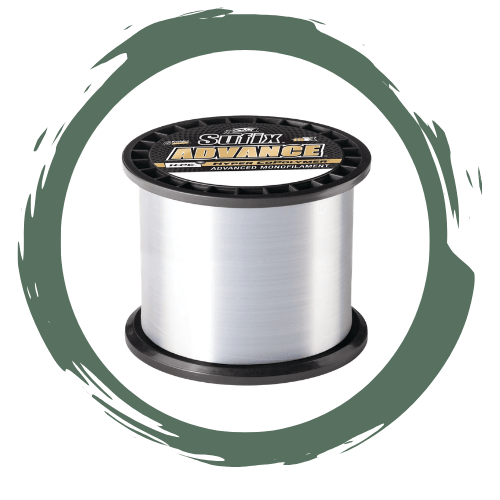
Through years of walleye fishing I have found that one of the most important elements in light tackle fishing is finding a high quality 6# test copolymer monofilament that fits your fishing style. You need to believe that the line you are using is capable of hooking and landing any size walleye. Here is a secret that I have used to find maximum trust in my monofilament. Before I ever use my light tackle rig for walleye fishing, I use it to catch hybrid striped bass and blue catfish up to 25 pounds. I figure if I can trust my setup to catch hard fighting species like that, it will also perform on any walleye I might encounter. For my light tackle fishing I want a very thin low visibility clear line with a built in stretch factor that only a top quality 6# monofilament copolymer can provide.
In choosing a line, anglers need to look for the best balance of high knot strength and low memory for easy casting on spinning reels. The abrasion resistance on a thin monofilament is probably not going to be a deciding issue. Today, the most advanced 6# test copolymer monofilament fishing lines are generally considered to be Gamma High Performance Copolymer, Maxima Ultragreen, Izorline XXX Super, and Sufix Advance Hyper Copolymer.
Please don’t be afraid to experiment to find the best copolymer line that fits your style of fishing. The 6# line that I use today is absolutely outstanding for knot and breaking strength but is only average in low memory and abrasion resistance. This fits my fishing style best since I do a lot of drifting and electric motor back trolling but very little casting to a target or into cover.
The Reel:
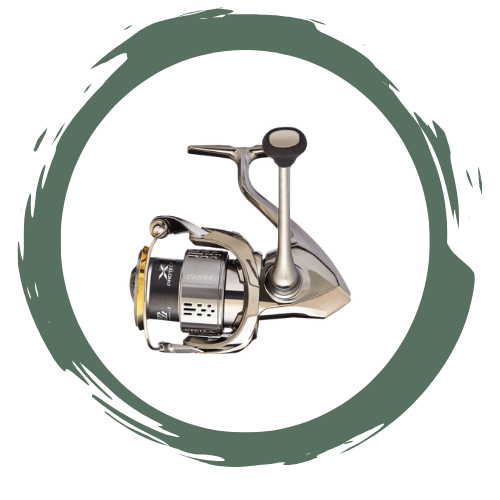
In my opinion, the best quality spinning reel that you can afford is by far the most important link in any light tackle fisherman’s system. Specifically, the spinning reel’s drag is what gives me the confidence to hook and fight a big fish. My drag needs to be silky smooth without the slightest bit of hesitation when starting and stopping. Any drag that isn’t smooth or chatters will always cost light tackle anglers big fish when the pressure is on. If you can’t trust the smoothness of your reel's drag system, you shouldn't be light tackle fishing with it.
I have used many different manufacturer’s spinning reels over the years but it wasn’t until I purchased a used reconditioned Shimano Stella for $300 that I realized the importance of a smooth drag. I have also used the less expensive Shimano Stradic fopr saltwater fishing and found the drag to be exceptional. If you want to be successful while light tackle fishing, your spinning reel is the one area you shouldn’t skimp. If you can’t afford a premium quality spinning reel try to find a good reconditioned reel or a decent lightly used reel that you can send to a trusted high performance reel repair service like Doug’s Reel Repair in Berlin Heights, Ohio.
The Rod:
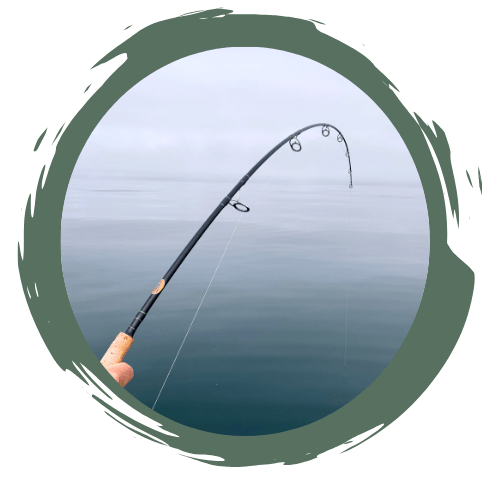
Light tackle rods need to perform perfectly every time. A good quality light tackle fishing rod needs to be able to bend all that way down to water when under pressure without fear of breaking. It needs to have the guides spaced perfectly to absorb the tension and friction created by the monofilament being stretched between them. And it needs to have just enough backbone that you can get a decent hook penetration at a distance with our small ultra-sharp hooks. My experience has been that medium priced graphite rods are normally very dependable in all these aspects.
I personally don’t find a need to use the most expensive rods. I usually look for a 6’ to 7’ length two piece rod with an IM6 or IM7 medium power graphite blank. I have had great success with both SS guides as well as ceramic guides. When I'm looking at rods I always check reviews on the manufacturer to check if anyone has been complaining about any breakage on any oftheir models. Some good quality medium priced rods are manufactured by Fenwick, Cabelas, Bass Pro, Pinnacle, Silstar, Browning and Fin Nor. There are a lot of light tackle anglers that swear by the sensitivity and craftsmanship of their higher priced rods from manufacturers like St. Croix, G. Loomis and Phenix.
The Lures:
Since you are using light tackle, you now have the distinct advantage of being able to use the smallest and sharpest hooks on the market. Don’t use lures with large hooks. Your hook up ratios would be terrible. Your light gear won’t adequately set a big hook from any distance away from the boat. Lighter tackle means you will be able to use a much lighter weight jig which imparts a more natural swimming action without hanging up on every rock it passes. Plus the fish will be hooking themselves with these smaller sharper hooks.
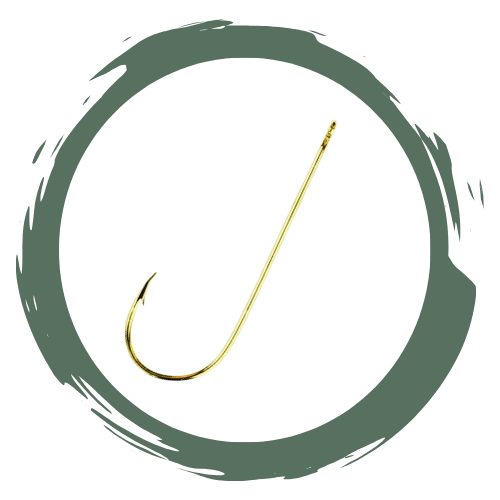
With a light tackle set up, I normally use tiny 1/16 oz. unpainted jigs with #1 gold Aberdeen hooks. Sometimes it is hard to find these jigs with a #1 hook, which is the perfect size for walleye fishing, so if all you can find has a smaller #2 hook I recommend bending the shank of a #2 hook to open up the gap. Jigs that are too small will do fine most of the time but occasionally they can be easier for big walleye to spit out without catching any meat inside the mouth. Wide gaps and even bending the point to aim up just slightly can result in more hook ups.
An Aberdeen hook is a lightweight, long-shank fishing hook with a rounded bend, designed primarily for fishing with live bait. It's known for its thin wire construction and it minimizes damage to live bait and often bends rather than breaks when snagged, allowing for easy extraction. They are ideal for walleye fishing with light monofilament line!
Light Tackle Tips
1. Design a Synergistic Set-Up:
Light tackle fishing means different things to different people. With a true light tackle set-up, every part of your gear needs to be synergistically designed and considered. Just one weak link might end up costing the fish of your dreams. Don’t be afraid to try light tackle fishing because it works plus it is a lot of fun. The most rewarding part of this type of fishing is catching a large fish with a well thought out light tackle system.
2. Use Lightest Jigs Possible:
Use the lightest jigs you can get down to the bottom in the depth of water you are fishing. The lighter jigs don’t snag up nearly as often. After some experience with most drift situations, I have found that I can effectively fish with a 1/16 oz. jig on and just above the bottom. When the wind and waves kick up a little I sometimes switch to a 1/8 oz. jig. Sometimes but rarely would I ever go any heavier unless I’m using a 3’ paddle tail on a 3/8 oz. jig in a bit faster drift.
For most walleye fishing situations on light tackle I use a 1/6 oz. unpainted jig with half nightcrawler when I’m searching an area. I do a controlled drift with the aid of my electric motor to stay on course. If there isn’t a decent wind for my drift, I back-troll slowly with my electric motor and try to maintain a specific depth where I am finding walleye. Although I rarely snag with Aberdeen hooks sometimes I do. A lot of times I can pull it free by going 180 degrees back over where it snagged and then lightly shake it loose. Keep in mind that the tighter you pull it into the snag the harder it is going to be to shake it back out.
3. Capitalize on Low Light Situations:
In the low light situations like early morning and the evening dusk or when fishing a good cloud cover, I always keep a few white jigs heads which I painted up with white fingernail polish. I believe the white head is just slightly easier for the walleye to spot in low light plus these conditions are when I most anticipate encountering my a biggest walleye. This is also when I use the largest whole nightcrawlers in my box hooked right at the tip of the nose for maximum length and wiggling.
4. Minnows are a Great Choice for Big Walleye:
Unfortunately, most times I’m fishing for walleye, minnows aren’t available. In the past when minnows were available I have seen people with minnows catch more than I do when using nightcrawlers by two to one ratio. So if minnows are available and affordable definitely use them when possible because the light tackle system works well with both minnows and nightcrawlers.
5. Snags are no problem:
If you snag with a thin Aberdeen hook and can't shake it loose, grab your line and pull slowly and steadily on the jig and many times it will straighten the hook enough to pull free. Then if the point hasn't been bent you can easily straighten it out and you won't need to retie on another jig. But be cautious because these hooks are needle sharp so it is easy to bend over the hook point and not realize it. If you are missing bites always check that point.
6. Plan to respool your reel often:
On a one week trip I often respool every third day. (More often if needed.) I specifically use 1000 series reels with low capacity (about 120 yards) because even with light tackle it would be really rare to get completely spooled. In all my light tackle fishing I was only spooled once when I accidently hooked a giant striped bass that would have been unstoppable on 30# line.
7. Protect your monofilament line
Keep your bulk monofilament spools stored in a climate controlled dark unlit closet (like your bedroom). UV destroys monofilament so never leave a spool where it gets direct or indirect sunlight. Clean your hands before spooling. Keep your reel away from things like gasoline and sunscreen. After you have spooled your reel you will get less wind knots if you remove the spool and put it in a bowl of warm water for about 10 minutes. Note; when respooling most manufactures will load the line so that it comes off their bulk spool counter-clockwise and most spinning reels wind the line on the reel going counter-clockwise also. Not adhering to this when you spool a spinning reel is just asking for issues so check it before you start filling the spool.