Rule of the Three Winds
What is The Three Wind Rule?
by Dave Reed
The three wind rule is a combination of hard earned experience coupled with real science. With the invention of sonar technology anglers have been slowly losing their fish catching knowledge that our grandparents taught us. Traditional fishing knowledge was gained via years of hands-on research without the aid of electronics. Fishing the winds has been a tried and true method for many years. Let's take a look at why this knowledge is so valuable and should never be lost in future generations.
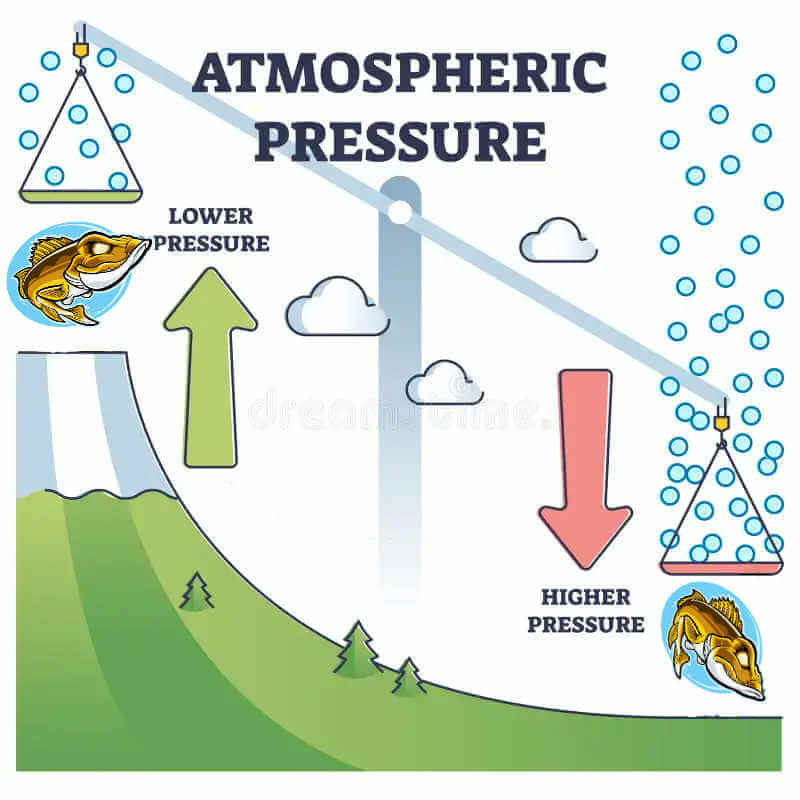
Why is this knowledge critical to our fishing success? Small shifts in barometric pressure can greatly alter fish behavior. Pressure changes affect whether objects sink, float, or remain suspended, disturbing that balance. Because pressure variations mimic slight changes in effective weight underwater, they amplify these movements and make items like small fish and organisms more likely to rise or fall. Low pressure releases the underwater world to move more freely and creates a feeding environment.
This old saying is over 400 years old and the science still backs it up today.
- Wind from the West fishing the best
- Wind from the East fishing the least
- Wind from the North do not go forth
- Wind from the South blows bait in their mouth
What are the Three Winds of the Three Wind Rule?
- The Feeding Wind
- The Dead Wind
- The Gold Wind
The Feeding Wind:
Every fish has a swim (gas) bladder. The gas bladder is programmed to help fish maintain the right depth. When air pressure changes that gas bladder expands or compresses. When air pressure drops the bladder expands and fish get hungry and more active. When the air pressure rises that same bladder gets squeezed and the fish feel sick, lethargic and they stop eating.
Wind direction ties it all together. The wind's direction tells you exactly what the air pressure is doing without needing a barometer. The Feeding Wind comes from the south or the west. A south wind brings warm humid air and stable pressure. West wind normally means fair stable weather or a very slow pressure drop. When a warm gentle wind is blowing from the south or west, fish are moving into shallow water and feeding. Fishing is even better if lower pressure and a Feeding Wind line up with peak solunar moon phases.
The Dead Wind:
The Dead Wind comes from the East or Northeast. It's the wind that follows a cold front. It brings colder dryer air and a very sharp increase in air pressure which compresses the fishes swim bladder and cause them to become uncomfortable and lethargic. We can equate this to when we have over-eaten and become very uncomfortable and just want to take a nap. Come to think about it, I guess if the fish experienced a Gold Wind period leading up to the high pressure system they also may have over-splurged. Crystal clear bluebird sky with practically no clouds and light wind means high pressure with the Dead Wind and fish dropping deep. Usually during this wind the fish retreat to deeper water and school up nearly motionless in a safe environment. During the Dead Wind the fisherman needs to just curb his expectations.
The Gold Wind:
So what is the Gold Wind? A Gold Wind happens when the wind shifts direction starting from the south then moving through the west and northwest and then around to the north. This shift means a cold front is on its way. The fish in a lake all begin to experience expanding low pressure bladders and they all feel an instinctive urge to feed immediately. Nature has taught them that the weather is about to get ugly and if they are going to survive they need to eat as much as possible. This golden period can even trigger a feeding frenzy during a two to four hour period just before a storm hits. Anyone that has ever experienced this for themselves will attest that it can be incredible but also incredibly dangerous for someone that doesn't want to quit because they are catching fish like never before.
Three Winds Summary:
High clouds barely moving means stable pressure and feeding fish. Low clouds moving fast means pressure is dropping and a potential Gold Wind is coming. While you are fishing always make mental notes of the wind direction. Then become more aware of shifting winds that can sometimes deliver a Gold Wind situation. In other words, if the wind is from the south in the morning and by noon it has shifted to the northwest it might be time to prepare for the coming two to four hour rapidly falling barometer Gold Wind window of success.
Be very careful during these periods. A Gold Wind can be the forerunner of a pretty severe storm sneaking up on you. If you are a long distance from safe harbor, consider making a run to a fishing spot closer to your safe harbor just in case an early rush to the dock is needed. After the low pressure storm has passed be prepared for the coming high pressure dead wind period. Note that dead wind is not referring to wind speed, it's referring to the fact that the fish seem to be playing dead. The actual winds during a "dead wind period", especially up north, can be both cold and howling.
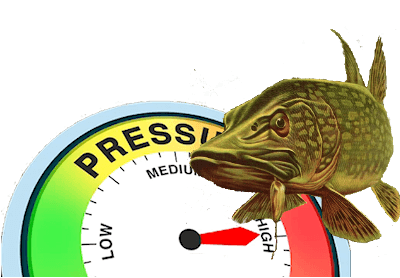
Another old timers' trick is to watch the smoke. If the smoke is rising straight up, the pressure is high but when smoke is falling towards the ground the pressure is low and the fish are moving up shallower to feed. A less reliable source can be done by observing the cows on your way to the lake. Cows often lay down during low pressure periods just before rain. There is an old saying that they lay down before a rain to keep the grass dry before a rainfall comes because they don't want a muddy bed. It's not scientific but I often use this bit of information just to get psyched up on my way to the lake.
When you couple this knowledge of the winds and air pressure along with a schedule of the local major and minor solunar periods you have all the ammunition you need for some pretty exciting fishing. You also won't waste a lot of time fishing when you likely won't be catching many fish. You can make for a better use of your time during a Dead Wind period by searching for new fishing structure and a more productive topography. The Feeding Wind coupled with a major solunar period tells you to quickly get to your favorite spots. We hope that you are lucky enough to experience a Gold Wind period on Lady Evelyn.
Exactly How Does Barometric Pressure Effect Walleye Fishing?
Barometric pressure dictates walleye activity by affecting their swim bladders. A falling/low pressure (pre-storm condition) atmospheric situation generally expands the bladder triggering active, shallower feeding. As pressure stabilizes after the storm, bringing clear skies and north or northeast winds walleye tends to become sluggish. Lethargic fish head for deeper, cooler waters. Walleye fishing can get tough during an extended high pressure system but at least it is still possible by fishing the deep water structure.
Those rising high pressure post-frontal systems make the walleye bladder shrink from the pressure and walleye become sluggish, deep, and tight to structure as the pressure moves above 30.12 Hg causing "lockjaw". Just imagine your hand exerting pressure on the water, with this it doesn’t allow fish to move freely so they become less active.
Ideal walleye conditions are often just simply stable moderate pressure (29.90 to 30.05 Hg). However anglers should watch for the falling low pressure just before a storm system which often trigger heavy feeding.
We have such an outstanding population of walleye on Lady Evelyn that atmospheric pressure is not as critical as it is on some bodies of water. Whenever it is safe to be out fishing on this lake you will always have an opportunity to catch fish.