How to Become a Walleye Sniper
Time For a New "Go To" Method for Walleye Fishing?
Over the past century of Ontario walleye fishing three distinct methods of catching them have become what most anglers call their "go to" methods. Experienced anglers have always had great success trolling, drifting or simply anchoring and then blind casting to cover an area. Minor variations and tweaking on these three techniques have been all that was ever needed to catch a decent share of fish on most lakes. Other than a bit of tweaking, why would anyone waste their time trying to “reinvent the wheel” when these three methods have always worked so well?
New Sonar Technology Can Be A Walleye Fishing Game Changer!
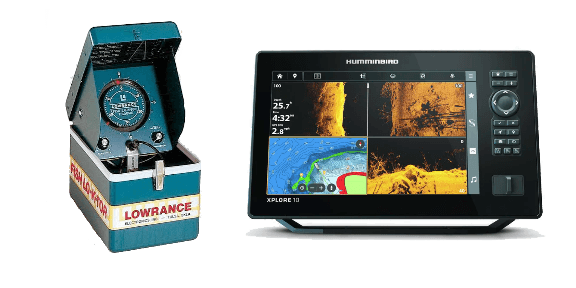
Over the past 40 years young tech savvy anglers began relying on sonar to help them better understand the bottom structure and topo that was below their boat. At first the old flasher units were named fish finders but they were actually a lot more useful as structure finders in my opinion. As computer processing power grew so did sonar technology and geo location. Today's units not only put you in the right location, they also can literally show you on a screen the exact fish you are searching for!
Forward Facing Sonar
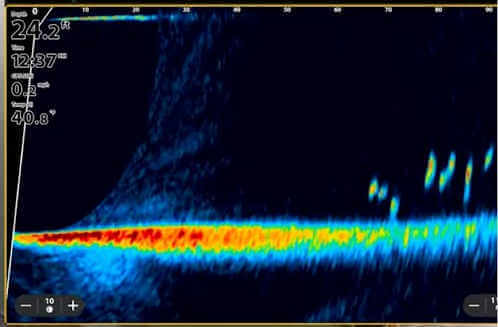
Today the newest units have something called FFS (Forward Facing Sonar) that can be added as an option. Yep, with FFS you can sit still, scan an area and spot the fish swimming anywhere in that area. You can make a cast and watch your lure sinking. You can even see exactly how the fish is reacting to your lure. Are they following the lure but not biting it? Switch to another lure and keep trying until the fish decides to commit. Is the fish leaving your lure and then swimming another direction? Use your electric motor and just follow the fish until you figure out how to get it to bite.
I don’t know about others but this seems more like sitting on my couch and playing a computer game. Catching fish has always been fun but for some reason this new FFS severely curtailed the fun factor for me so I have avoided using it. I am sure I could catch a lot more fish using FFS but at what cost to the challenge? By the way, the average expense to set up one of these units on your own boat back home is about $3500 to $4000. Before you even ask, they are difficult to set up, expensive to install and have a steep learning curve.
However, if you don’t want to spend a lot of money on FFS, there are some newer, effective fishing methods that work great with the newer sonar units. I call these methods “walleye sniper fishing.” You’re still using sonar, but it’s not quite as easy to catch walleye as it is with FFS.
The Simplest Method of Walleye Sniping
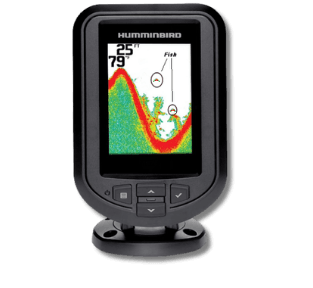
You can even do this simple method with one of our rental boats and the Humminbird sonars we have installed on them. The first step is to use a Lady Evelyn lake map and pick out a few spots that look like they would be productive for walleye. Go to one of those areas and cruise the area at about 3-5 mph with your sonar on while watching closely for any tell-tale arches that indicate a fish that has gone through your sonar beam. A fish will appear as a semi-curve from low to high to low again as the fish goes in and out of your sonar cone. If you see an arch that is not sitting directly on the lake bottom, you can rest assured that it is most likely a fish. If you have a GPS unit, make a waypoint on the spot. No GPS? If you spotted a single fish you might want to stop the boat and just fire a cast or two in the general direction of where you marked the fish. However, if you saw several fish arches, it’s a good idea to bring along a weighted float that you can toss out and then go back and fan cast the entire area. A ¼ oz. jig head with a 3” paddle tail grub works great for sniper fishing but also a slow sinking wiggly live nightcrawler on a ⅛ oz jig head is rarely passed up by even the most cautious walleye!
The More Sophisticated Method of Sniping
If you have brought along your own sonar unit with side imaging you’ll have the ultimate sniping setup. With a little bit of practice this method is deadly. Cruise an area with your SI sonar set to read out to about 50 feet. Important note: Remember, if you are running in 20 feet of water and your SI is set to read out to 50 feet, you are actually only reading out about 30 feet to each side because you have to subtract the depth (which is showing as a black area on your screen) from the 50 feet you have it set at. In other words, if you want to read 50 feet to each side in 20 feet of water you need to set your side imaging out to 70 feet. Formula is (SI distance minus depth = actual distance from boat)
If you are like me and having trouble seeing the actual fish on your side imaging sonar this would be a great time to be tweaking your settings. Any actual walleye you see on SI will be very subtle, almost looking more like a small grain of rice than a fish. If you aren’t sure, just drop a waypoint on what you saw then turn around and make a few casts with a jig to the area around the waypoint. You can also toss out a slip bobber rig with a worm or minnow set to ride about five feet off the bottom. I promise that you will catch fish this way and the bonus is you will also learn through the success of finally recognizing the fish on your side imaging sonar.
Summary
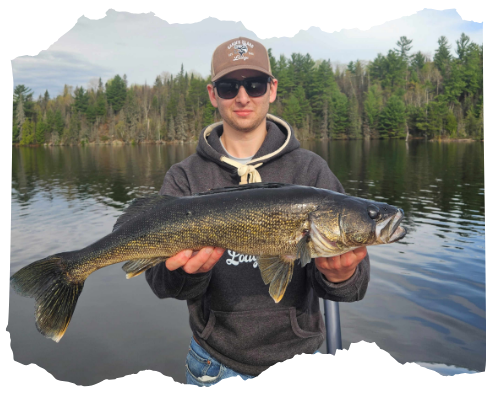
Learning to become a “walleye sniper” is a lot of fun and can become a valuable tool in your fishing arsenal. Some experts and tournament pros now claim they spend a lot more time hunting than fishing. Even though they catch a lot more fish with these units they say the ratio is 80% looking with only 20% fishing. My own experience has been that I often get tired of watching the screen for long periods and prefer to divide my time when using this method to about 50% looking and 50% casting. I currently run a Humminbird Xplore 10 and have it set with the SI on the top half of the screen and DI and chart view side by side on the bottom half of the screen but when I go back to cast the area I switch off the SI and just use my 2D and chart view to get back to the waypoint.
Article By Dave Reed (Synergy Coding)